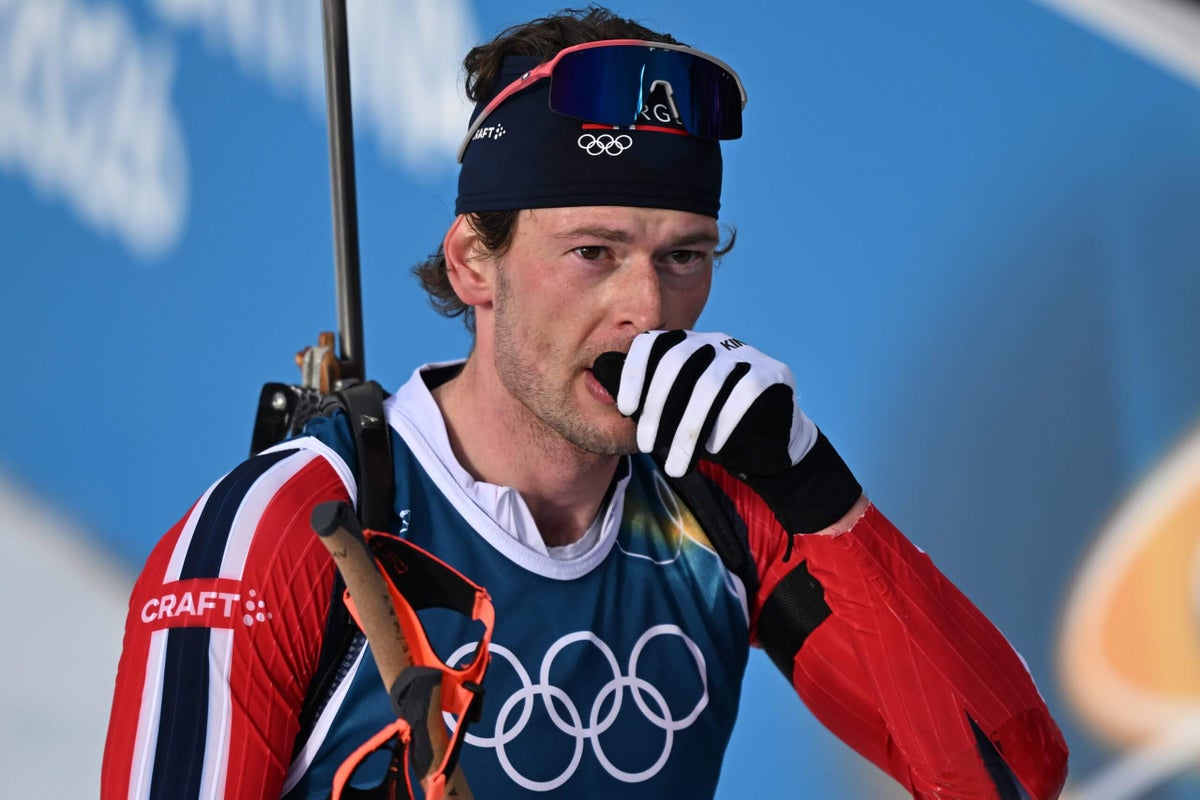
The Unprecedented Confession: An Olympic Athlete's Private Turmoil Made Public
The world of elite sports is often characterized by narratives of unwavering focus, relentless training, and the pursuit of glory. Athletes are held to a high standard, not just for their physical prowess but often for their perceived moral character. Norwegian biathlete Sturla Holm Laegreid, a name synonymous with multiple world championships and an Olympic gold from the 2022 Beijing Games, inadvertently shattered this pristine image at the Milano Cortina 2026 Winter Olympics. His journey took an unexpected and deeply personal turn when he made a stunning public confession that resonated far beyond the biathlon tracks: he had cheated on his girlfriend.
This revelation came not in a carefully managed press conference, but in the raw, emotional aftermath of a race. Just five days after securing a bronze medal in the men's 20km biathlon, Laegreid stood before a Norwegian television crew and, with visible distress, laid bare his personal struggles. He confessed to infidelity prior to the Olympics, revealing that he had informed his now-former girlfriend only a week before the Games began, leading to their breakup. "I told her a week ago. And it's been the worst week of my life," he emotionally recounted, expressing a profound regret and a poignant hope to mend the fractured relationship. This unscripted moment immediately went viral, shifting the spotlight from his athletic achievements to a deeply personal and uncomfortable truth, making him the prime example of an Olympic cheated on girlfriend narrative unfolding live.
The timing of the confession, right amidst the high-stakes environment of the Winter Olympics, amplified its impact. It painted a picture of an athlete grappling not just with the immense pressure of competition but also with the heavy burden of personal remorse and public judgment. Laegreid's candor, while praised by some for its honesty, also sparked considerable debate about the boundaries between an athlete's private life and their public persona, especially when that private life impacts their performance and the broader perception of the sport.
Medals Under Scrutiny: Sturla Laegreid's Remarkable Performance Amidst Scandal
What makes Laegreid's story truly compelling is the stark contrast between his personal turmoil and his athletic performance. Despite the overwhelming emotional weight of his confession and the subsequent media maelstrom, Laegreid continued to excel at the Milano Cortina Games. Days after his initial bronze and the viral interview, he claimed yet another bronze medal, this time in the men's 10km sprint. His remarkable resilience culminated in a silver medal just days later, finishing second in the men's 12.5km biathlon pursuit behind Sweden's Martin Ponsiluoma. In total, Laegreid amassed three medals at an Olympic Games where his personal life became as much a talking point as his sporting achievements. This incredible feat cemented his place in Olympic history, not just for his skill but for navigating an unprecedented personal crisis on the world's biggest stage. For a deeper dive into his challenging journey, you can read more about Sturla Laegreid: Medals & Scandal After Olympic Cheating Confession.
His ability to "try not to be affected by it," as he stated after one of his races, speaks volumes about the mental fortitude required of elite athletes. While many would crumble under such intense scrutiny and personal guilt, Laegreid managed to channel his focus, at least temporarily, back onto the biathlon course. This raises fascinating questions about the psychology of performance: can immense emotional pain sometimes paradoxically fuel a drive to succeed, perhaps as a form of distraction or an attempt at redemption?
However, this success was not without its critics. While some admired his resilience, others felt his public display of emotion was self-serving. Some local media reports indicated that his ex-girlfriend, who remains unidentified, was displeased with the public nature of his confession. "I did not choose to be in this position, and it hurts to have to be in it," she was reportedly quoted as saying, highlighting the collateral damage of public revelations. Furthermore, some critics argued that Laegreid's tearful confession unfairly diverted attention from his teammate, Johan-Olav Botn, who had won the gold medal in the very event where Laegreid first opened up. This highlights the delicate balance athletes must strike between their personal lives and their responsibilities as representatives of their sport and country.
Navigating Public Perception: Sympathy, Scrutiny, and Sportsmanship
The Laegreid saga became a masterclass in how an athlete's personal life can intersect with, and sometimes overshadow, their professional endeavors. The public's reaction was multifaceted. There was certainly an element of sympathy for a young man visibly struggling with his conscience and hoping for forgiveness. His raw honesty was a stark departure from the often-polished facades of public figures. Yet, there was also significant scrutiny. The revelation of an Olympic cheated on girlfriend scenario inevitably leads to moral judgment, and questions arose about whether his confession was truly for his ex-girlfriend or, at least in part, for public absolution.
The incident sparked a wider debate about media ethics and the public's right to know. Should athletes' private lives be fair game for public discussion, especially when they voluntarily disclose such information? And what responsibility do media outlets have when reporting on such sensitive personal matters, particularly when the details impact an unwitting third party? Laegreid's story underscored the immense pressure athletes face, not only to perform but also to conform to societal expectations of character, and the unforgiving nature of the digital age where every confession can go viral.
For aspiring athletes, Laegreid's experience offers a cautionary tale about the pervasive nature of public scrutiny. While integrity and honesty are virtues, the manner and timing of personal revelations can have unforeseen and far-reaching consequences, affecting not only the individual but also those around them. Maintaining a strong ethical compass and understanding the potential ripple effects of personal choices are crucial for anyone in the public eye. You can delve deeper into the aftermath of his revelation in Norwegian Biathlete's Viral Confession: Wins 3 Medals Post-Cheating.
Beyond the Finish Line: What Laegreid's Journey Teaches Us About Resilience
Sturla Holm Laegreid's dramatic Olympic performance, set against the backdrop of a viral cheating confession, offers profound insights into human resilience. To perform at an elite level, capturing multiple medals while simultaneously navigating a public personal crisis, is an extraordinary feat of mental toughness. It highlights that even when personal lives are in disarray, the ingrained discipline and competitive drive of a world-class athlete can sometimes override emotional turmoil, at least temporarily.
His story also serves as a poignant reminder of vulnerability. Even the most accomplished athletes are human, susceptible to mistakes, and capable of deep remorse. Laegreid’s confession stripped away the veneer of the invincible Olympian, revealing a flawed individual wrestling with the consequences of his actions. This vulnerability, while painful, also fostered a unique connection with many who recognized the universal struggles of regret and the hope for redemption.
From a broader societal perspective, Laegreid’s journey encourages a more nuanced discussion about forgiveness, accountability, and the complexities of human relationships in the public sphere. It asks us to consider whether an athlete's personal failings should diminish their professional accomplishments, and how society balances judgment with empathy. Ultimately, Laegreid's unlikely road to Milano Cortina medals, fraught with both triumph and personal scandal, underscores the multifaceted nature of fame, the weight of personal choices, and the incredible, sometimes contradictory, power of the human spirit to endure and even excel amidst adversity.